Built On Family. Backed For Life.
Signed in as:
filler@godaddy.com
Your Windshield Isn't Just Glass Anymore.
That camera near your rearview mirror may be watching lane markings, vehicles, signs, and the road ahead.
Today's windshields can be part of an entire safety system known as ADAS — Advanced Driver Assistance Systems.
When a windshield containing an ADAS camera is replaced, the job may not end when the glass goes in.
The system may need to be recalibrated so the camera knows exactly where it's looking.
How Windshields Learned to Watch the Road
Loose Roads, Flying Stones
Before automobiles, horse-drawn wagons traveled on dirt and gravel
Early windshields had one main job: protect drivers and passengers from wind, weather, insects, and road debris.
There were no cameras watching lane markings. No collision warnings. No computers helping monitor the road.
The windshield was simply a window to the world ahead.
Vehicle manufacturers continued improving safety glass, seat belts, braking systems, and other safety technology.
The windshield also became an important structural component of the modern vehicle.
Cars were getting safer—but they still depended almost entirely on the driver to see trouble coming.
Electronic safety technology began changing the way vehicles responded to the road.
Sensors, cameras, radar, and computer-controlled systems increasingly helped vehicles detect what was happening around them.
The automobile was beginning to do more than move.
It was beginning to see.
Forward-facing cameras became increasingly common near the top center of the windshield.
Depending on the vehicle, these cameras can support features such as:
Lane Departure Warning
Lane Keeping Assistance
Forward Collision Warning
Automatic Emergency Braking
Traffic Sign Recognition
Adaptive Cruise Control
Suddenly, replacing a windshield wasn't always just a glass job anymore.
Modern ADAS cameras are designed to operate within very specific parameters.
After certain windshield replacements, repairs, collisions, suspension changes, wheel alignments, or other manufacturer-specified procedures, an ADAS system may require calibration.
Calibration helps ensure the vehicle's cameras and sensors are correctly aligned with the vehicle and the road.
A little off can matter a lot.


Auto glass has changed.
Years ago, replacing a windshield mostly meant removing the damaged glass, preparing the opening, installing the replacement, and allowing the urethane to properly cure.
Those things still matter.
But today, there's another question.
Is your vehicle looking through the windshield too?
Many newer vehicles have forward-facing cameras mounted near the windshield that support driver-assistance features. When the windshield is replaced, manufacturer procedures may require that camera to be recalibrated.
That’s why correctly identifying your vehicle, windshield, and ADAS equipment matters before the job begins.
See a camera near your rearview mirror? Your vehicle may have ADAS technology that requires special procedures when the windshield is replaced.
Calibration helps ensure the camera or sensor is correctly aligned according to the vehicle manufacturer's procedures.
Some vehicles require static calibration, some dynamic calibration, and some require both. We determine what your vehicle calls for.
ADAS can make windshield replacement sound complicated. It doesn’t have to be. Here are some of the questions we hear most often.
Possibly. Many newer vehicles have a forward-facing camera near the rearview mirror that looks through the windshield. It may support features such as lane departure warning, automatic emergency braking, or forward collision warning.
Replacing the windshield can change the camera's relationship to the road. If the manufacturer requires calibration after replacement, the system needs to be calibrated according to those procedures.
No. It depends on your vehicle, its equipment, and the manufacturer’s requirements. We identify what your vehicle has and determine what procedure is required.
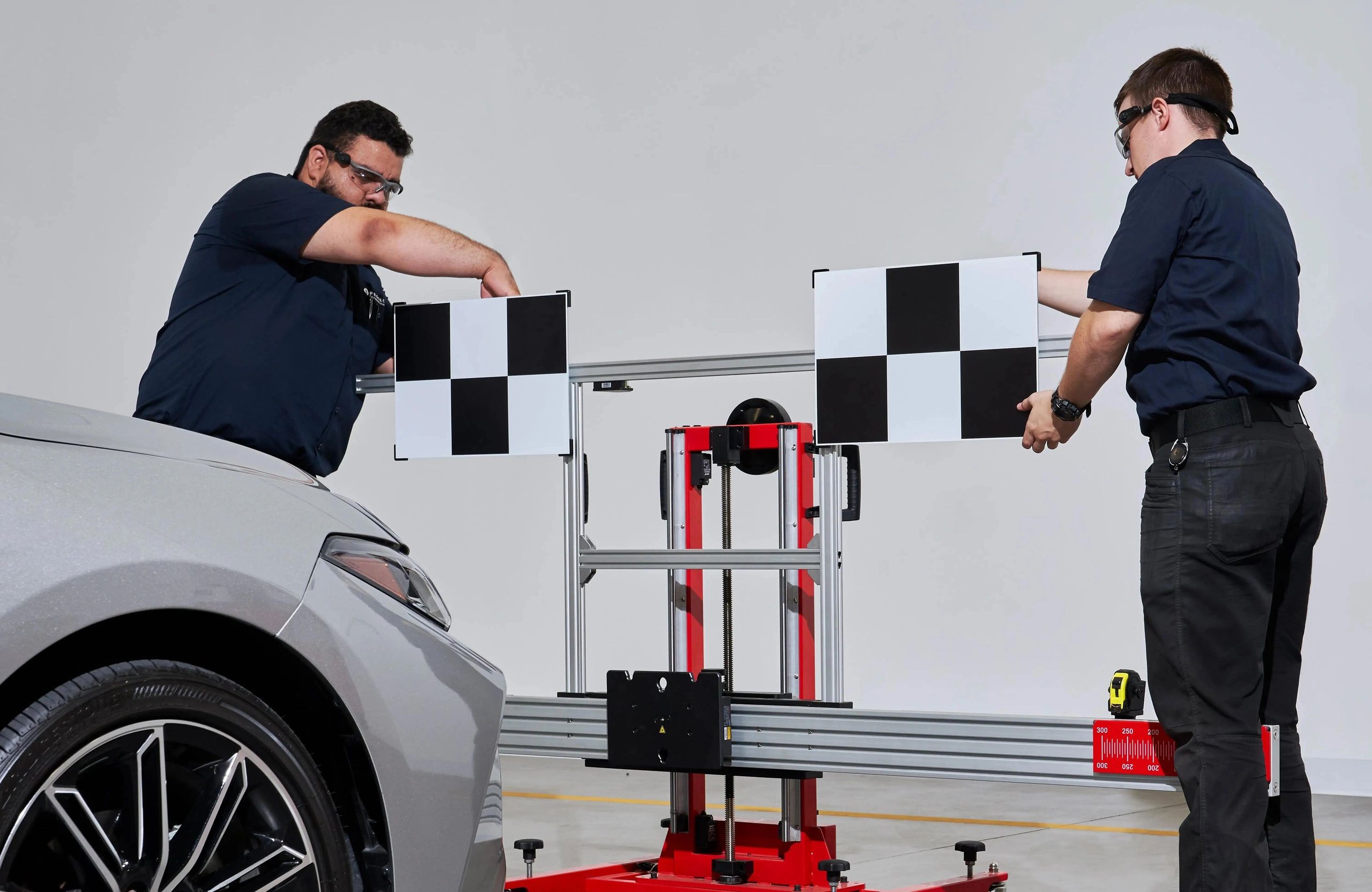
Static calibration is performed while the vehicle is stationary, typically using precisely positioned targets and specialized equipment.
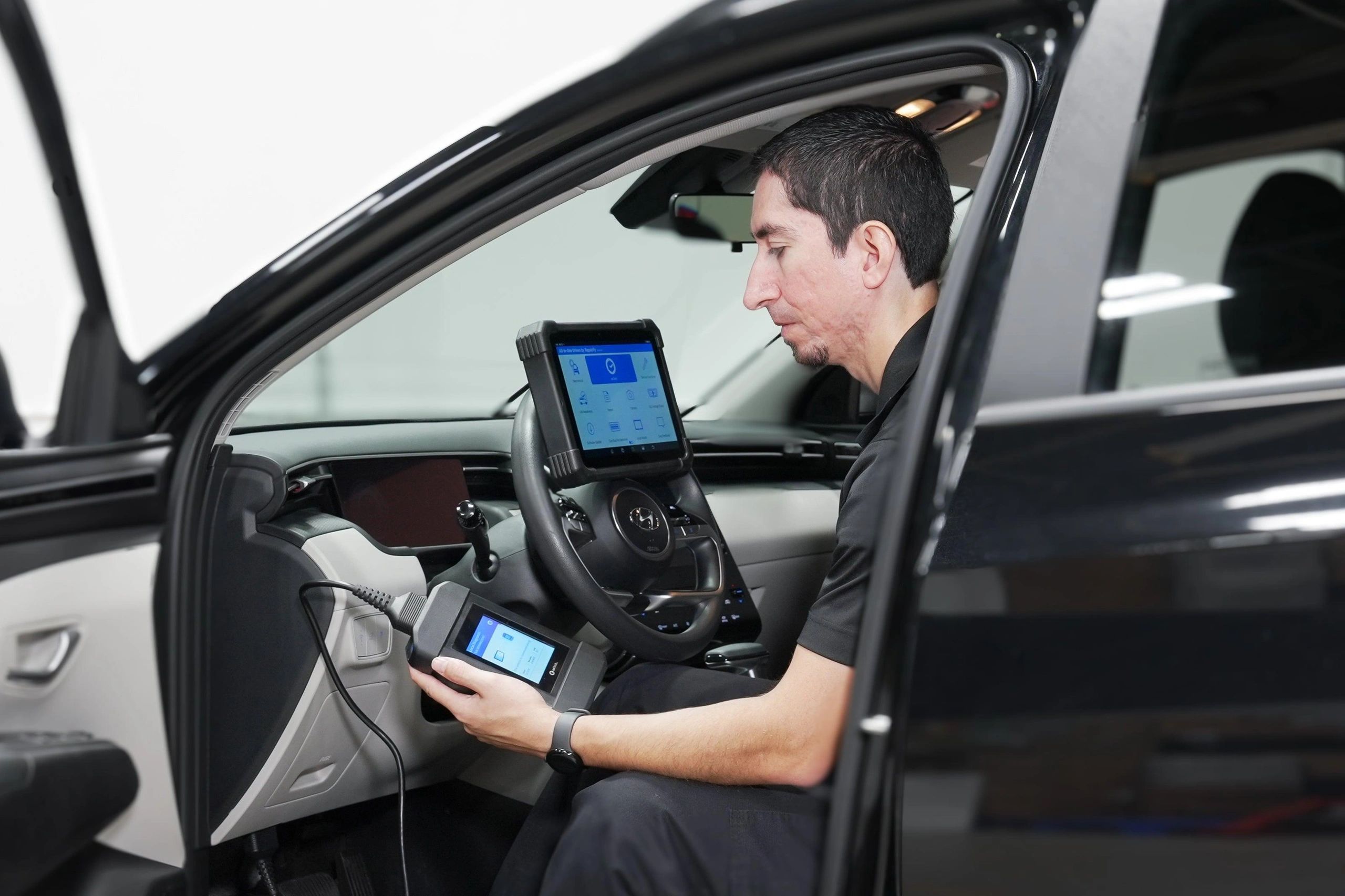
Dynamic calibration requires the vehicle to be driven under specified conditions while the system performs its calibration procedure.
Some vehicles require both.
Not necessarily. A dashboard without a warning light does not by itself confirm that a required calibration has been completed successfully.
That depends on the vehicle and the type of calibration required. Dynamic calibration can also depend on road, traffic, weather, and visibility conditions. We’ll explain what your vehicle requires before the work is completed.
Nope. You're still the driver.
ADAS features are designed to assist you—not replace you. Keep your eyes on the road, your hands ready, and follow your vehicle manufacturer’s instructions for using its driver-assistance features.
New windshield + ADAS camera = don't guess.
Let us identify your vehicle's system and determine whether calibration is required.
Not every vehicle has the same ADAS equipment or calibration requirements. Your year, make, model, windshield, and manufacturer procedures help determine what your vehicle needs.

🚘 No ADAS Camera: Your vehicle may not have a forward-facing camera associated with the windshield.
📋 Manufacturer Procedure: Calibration is not specified for the work being performed.
🔍 Vehicle Specific: Requirements are determined by the vehicle and the work performed—not by guessing.
✅ We Check: We identify the vehicle's equipment and requirements before determining the next step.

📷 Camera at the Glass: Your vehicle has a forward-facing camera looking through the windshield.
🪟 Windshield Replacement: The manufacturer specifies calibration after the windshield is removed or replaced.
🔧 Other Repairs: Certain collisions, alignments, suspension work, camera removal, or other repairs may also trigger a calibration requirement.
🎯 Follow the Procedure: If calibration is required, the correct static, dynamic, or combined procedure should be followed for that vehicle.

DON'T GUESS—LET US CHECK IT.
A camera behind your windshield doesn't automatically tell you what calibration procedure your vehicle requires.
We'll identify your vehicle's ADAS equipment, check the requirements for the work being performed, and determine the correct next step.
Built on Family. Backed for Life.
We love our customers, so feel free to visit during normal business hours.
Open today | 07:00 am – 05:00 pm |
We use cookies to analyze website traffic and optimize your website experience. By accepting our use of cookies, your data will be aggregated with all other user data.